
A first look at Fly Greatcircle
Words only go so far, so here is the game itself. These come from a test world I set up in 1950, with a made-up airline called Meridian Air flying out of Chicago and a few rivals around it. The airlines and numbers are invented. Everything else is the real game.
The live map
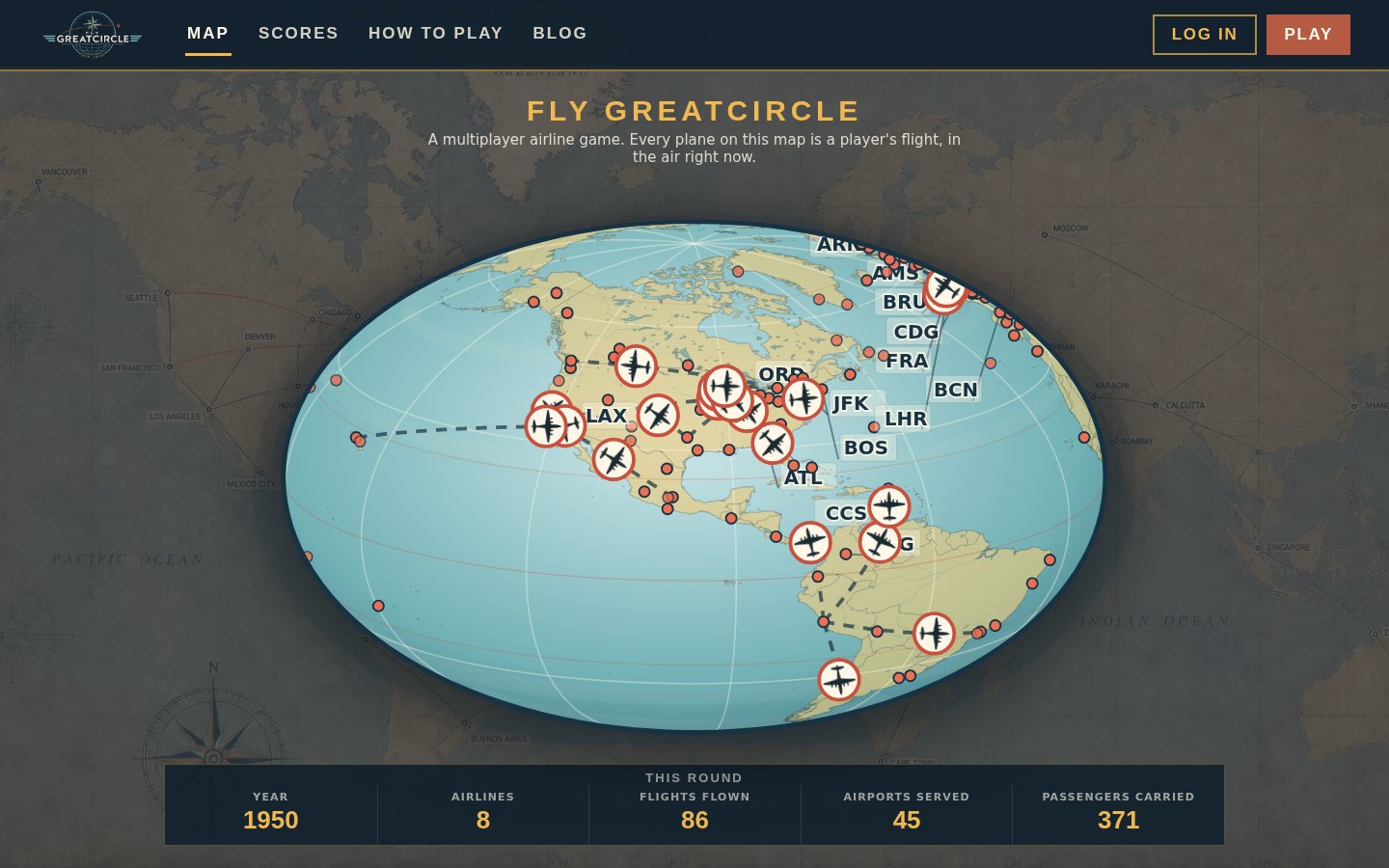
The homepage shows every airport and every plane in the air right now. Each plane is a flight by one of the airlines in the world. You can watch it without an account.
A route network
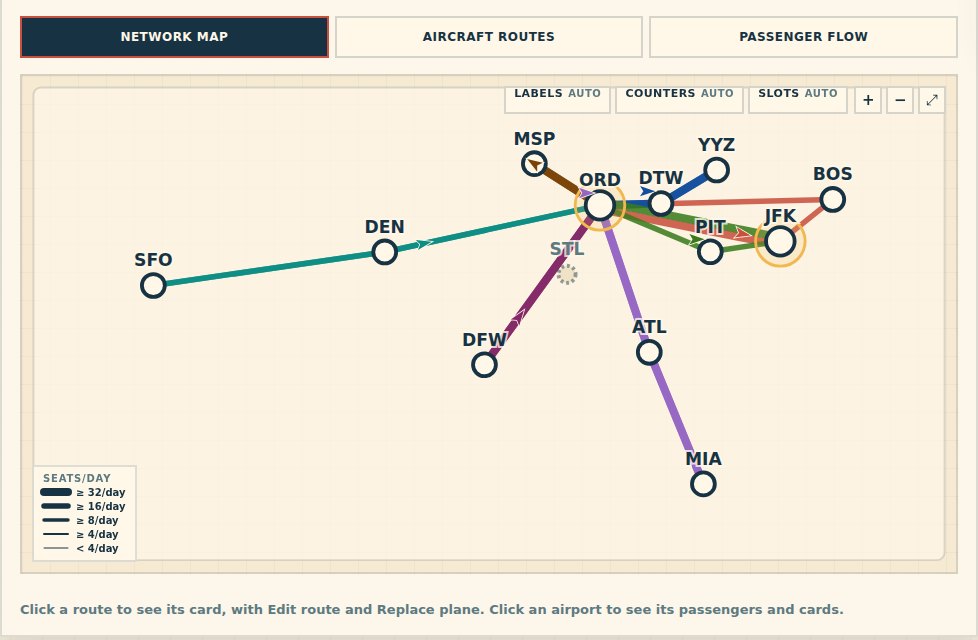
Routes are how an airline grows. Chain a few airports together and a plane flies the loop on its own, even while you are away. Each route gets its own color, and thicker lines carry more seats a day. This airline runs seven routes out of Chicago, from Boston and New York to Miami and San Francisco.
Where passengers go
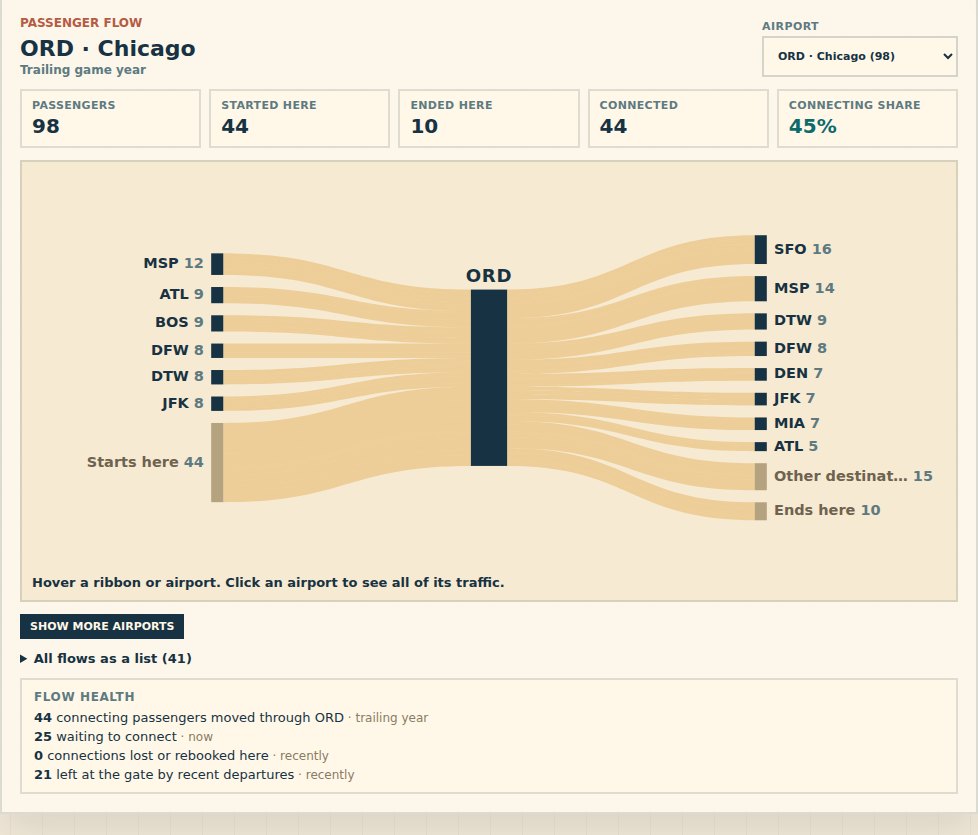
Passenger Flow shows where travelers through an airport come from and where they go next. Here, almost half the passengers passing through Chicago are changing planes, which is what makes a hub a hub.
Flying by hand
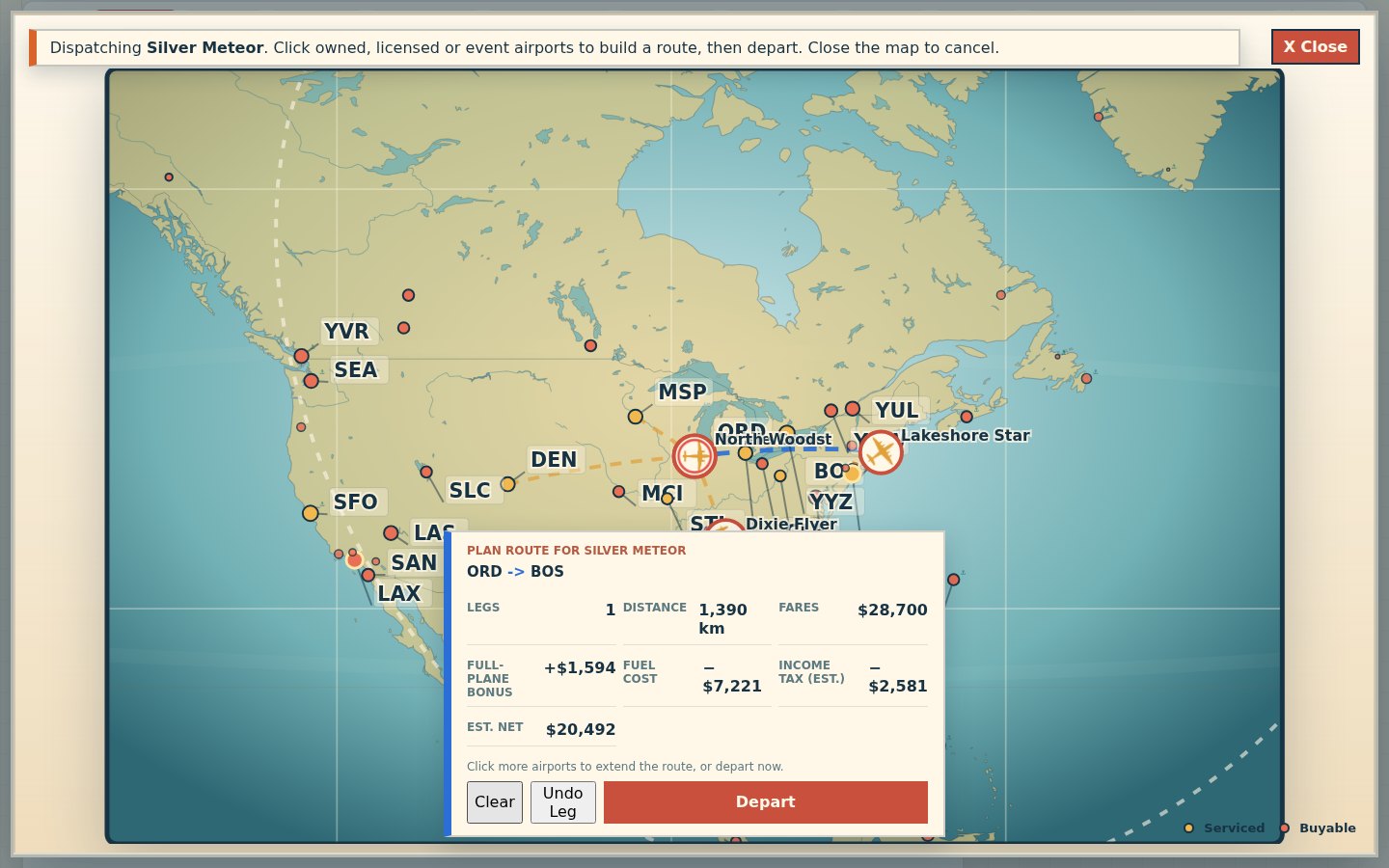
You do not need a route to fly. Board some passengers, click where you want to go, and the game shows the fares, the fuel and the estimated profit before you press Depart.
Every passenger is a card
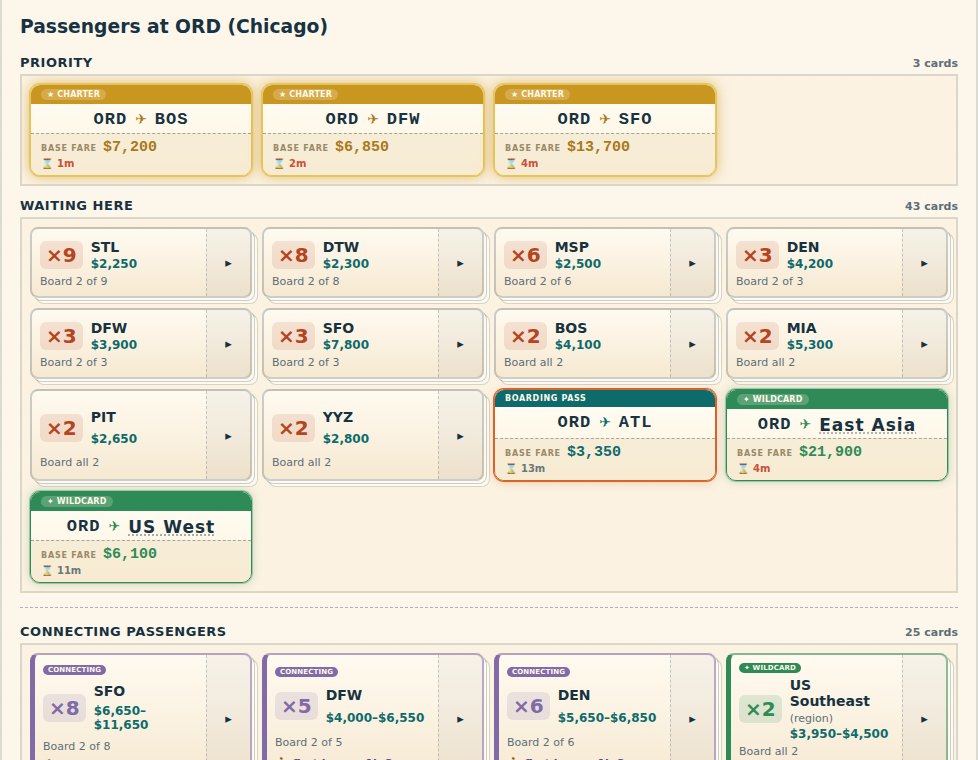
Every traveler is a card with a destination and a fare. Charter flyers pay a premium. Wildcards will go to any airport in a region. Connecting passengers are waiting to change planes. Pick them up before another airline does.
The fleet
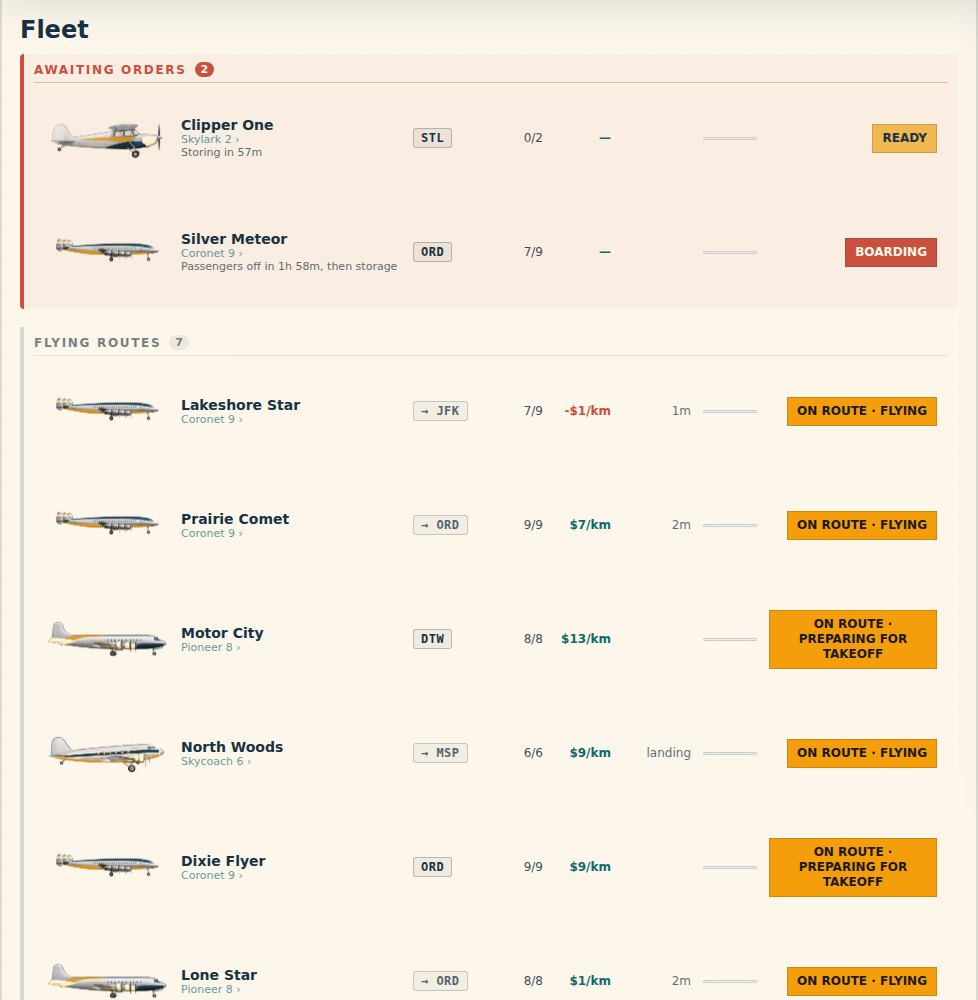
The fleet board shows every plane at a glance: where it is headed, how full it is and what it earns per kilometer.
The aircraft
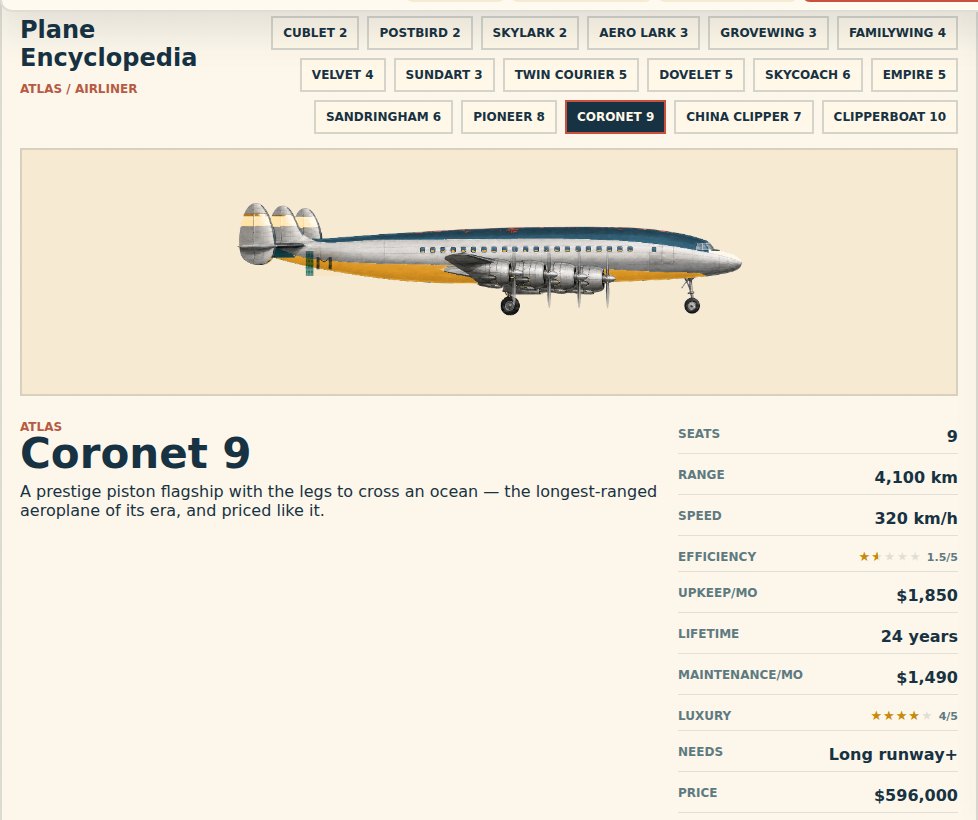
Aircraft arrive around their real-world dates, each inspired by a real type, and the Plane Encyclopedia shows every one in your airline's colors. This is the Coronet, a four-engine flagship with the range to cross an ocean.
Your turn
That is a small slice of it. Read why I built the game, or found your own airline and see how far you can take it.